Written by My Collaborative Team President Edward S. Sachs
When most people think about plain language, they think about readability. They think about making documents easier to understand, reducing confusion, and helping clients make informed decisions.
Those are all important benefits. However, there is another reason plain language deserves a place in the Collaborative Process.
It reflects the way we want people to experience the process itself.
Collaborative Practice was built on the idea that conflict can be addressed differently. Instead of positioning professionals as gatekeepers of information, the process invites clients into meaningful participation. Instead of relying on power, pressure, or procedural complexity, it relies on transparency, trust, and shared understanding.
The language we use in our documents should support those same goals.
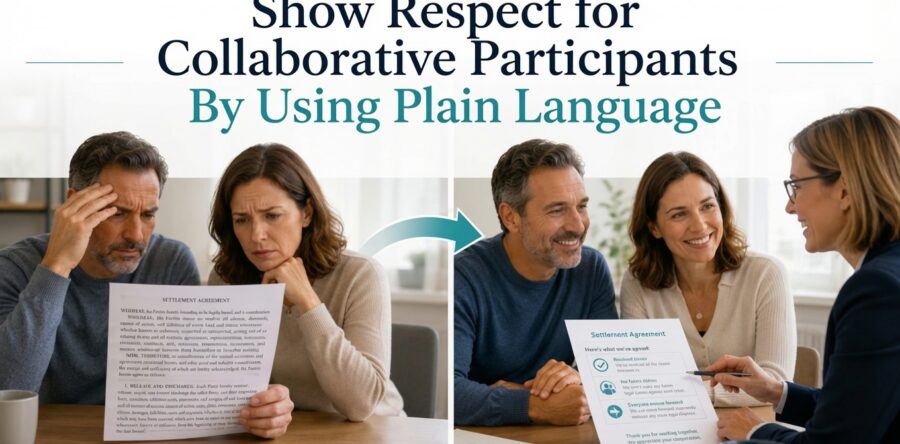
Every document sends a message. Beyond the legal terms and practical provisions, it communicates something about the relationship between the professionals and the clients. Documents filled with technical language can unintentionally create distance. They remind people that they are operating in a system they do not fully understand and may never fully understand.
Plain language sends a different message.
It tells clients, "This process belongs to you."
It communicates that there is no hidden meaning buried in the fine print and no need for specialized interpretation to understand the decisions being made. It reinforces the idea that Collaborative Practice is designed to help people navigate difficult transitions, not overwhelm them with complexity.
This becomes particularly important when emotions are running high. Divorce, parenting disputes, and family transitions often occur during periods of significant stress. Even highly educated clients may struggle to absorb information when facing uncertainty about their future.
In those moments, clarity becomes an act of service.
A plainly written document reduces the amount of energy required to understand what is being discussed. Instead of spending time deciphering language, clients can focus on the substance of the conversation and the decisions that matter most to their family.
Plain language also promotes consistency across the Collaborative team. Attorneys, mental health professionals, financial neutrals, and child specialists each bring their own expertise and professional vocabulary. When documents are written in language that everyone can understand, the entire team is able to communicate from a common foundation.
Perhaps most importantly, plain language helps ensure that the final agreement remains useful long after the case is over.
The true test of any Collaborative agreement is not whether it sounds impressive when signed. It is whether the people who rely on it can understand it years later. A parenting plan should still make sense during a future scheduling conflict. A marital settlement agreement should still provide guidance without requiring a return trip to a lawyer's office for translation.
Plain language helps make that possible.
As Collaborative professionals continue exploring ways to improve the client experience, plain-language drafting represents more than a technical improvement. It is an opportunity to align our documents with the values that define the Collaborative Process itself.
When people feel respected, included, and informed, they are more likely to trust the process, engage fully, and take ownership of the outcomes they create. That may be the most important benefit of all.
Mark your calendars to join My Collaborative Team on June 25th at 4:30pm ET to discuss and see examples of plain language forms with MHP/Collaborative Facilitator Jeremy Gaies and Collaborative Family Law Attorney Adam Cordover. Hear input and provide feedback to Collaborative Professionals who are already utilizing plain language agreements.