
Written by My Collaborative Team Marketing Director Eric Sachs
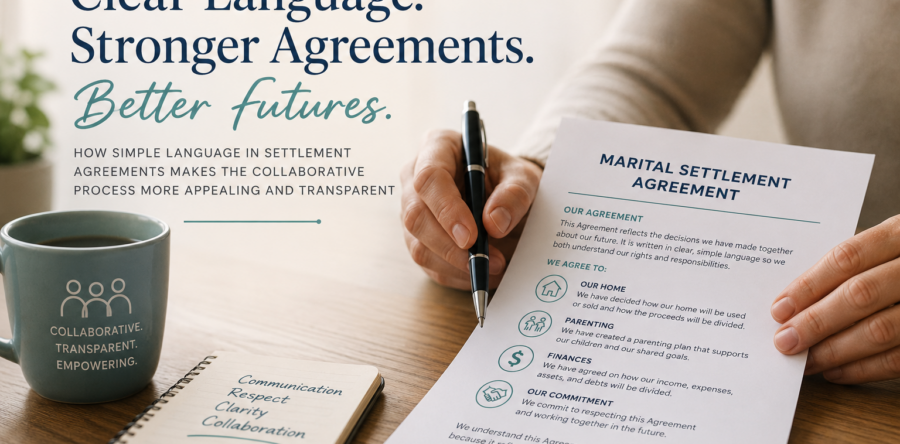
One of the most overlooked advantages of the Collaborative Process may also be one of its most powerful marketing tools. The use of clear, understandable language in settlement agreements.
For many people going through a divorce, the legal documents they receive can feel overwhelming. Traditional legal agreements are often filled with complex terminology, lengthy provisions, and language that requires interpretation by attorneys long after the documents are signed. Clients may leave the process with a settlement agreement in hand but little understanding of what they actually agreed to.
The Collaborative Process offers an opportunity to change that experience.
One of the core goals of Collaborative Divorce is helping families make informed decisions. If clients are expected to make thoughtful choices about parenting, finances, and their future, they should also be able to understand the final agreement that reflects those decisions.
When Collaborative professionals draft agreements using plain language, clients gain confidence in the outcome. They can read the document and clearly understand their rights, responsibilities, and commitments. Instead of feeling intimidated by legal jargon, they feel ownership of the agreement they helped create.
That confidence often translates into greater satisfaction with both the process and the outcome.
Trust is one of the most important factors influencing whether a prospective client chooses the Collaborative Process. People who are considering divorce are often fearful of being taken advantage of or getting lost in a complicated legal system.
Plain-language agreements reinforce the transparency that Collaborative professionals strive to provide throughout the entire process. When clients can easily understand what they are signing, they are more likely to trust the professionals involved and feel secure in the decisions being made.
This transparency stands in stark contrast to the perception many people have of litigation, where legal procedures and court filings can feel confusing and inaccessible.
Collaborative professionals often focus their marketing on benefits such as reduced conflict, privacy, cost savings, and improved co-parenting relationships. While these benefits are important, prospective clients are also looking for something much simpler: clarity.
Imagine being able to tell prospective clients that at the end of their Collaborative matter, they'll receive an agreement that they can actually read and understand.
That message is powerful because it addresses a common frustration people have with the legal system. It speaks directly to a client's desire to remain informed and involved in decisions that affect their family and future.
In a marketplace where many legal services appear similar, the promise of clarity can become a meaningful differentiator.
People are more likely to follow agreements they understand.
When settlement agreements are written in straightforward language, misunderstandings are reduced. Clients can refer back to the document months or years later and understand what is expected without needing additional interpretation.
This can help reduce future disputes, minimize post-judgment conflicts, and increase long-term satisfaction with the process. In many cases, a well-written plain-language agreement becomes a practical roadmap for the future rather than a legal document that sits unread in a filing cabinet.
Using plain language in marriage settlement agreements is not just good drafting practice. It reflects the values that define the Collaborative Process such as transparency, informed decision-making, respect, and client empowerment.
Perhaps most importantly, it is a marketing advantage.
When prospective clients learn that Collaborative Divorce produces agreements they can understand, they begin to see a process that is fundamentally different from what they may expect from traditional divorce. They see a process built around communication rather than confusion, understanding rather than uncertainty, and collaboration rather than conflict.
In an era when consumers increasingly value transparency and clarity, plain-language agreements may be one of the strongest, and most underutilized, ways to showcase the true benefits of the Collaborative Process.
Join us on Thursday at 4:30pm ET as we welcome Adam Cordover to the My Collaborative Team virtual happy hour as we discuss this concept of plain language marriage settlement agreements. Adam will share the documents he utilizes and the language he has crafted for all attendees to take home and apply to their own practice.